
Industrial Fisheries and their Ghost Nets*
Industrial and smaller fishers alike routinely lose or dump synthetic fishing gear to the ocean.
Petroleum based synthetic nets began dominating the market from the 1970s, which means nets have been dumped into the ocean for more than 50 years. Drifting for decades through the ocean, the impact of these ghost nets on marine animals has been lethal. As just one example, modelling by CSIRO and GNA, estimated that between 4,866 and 14,600 turtles are caught in ghost nets annually, in the Gulf of Carpentaria alone.[1]
Commercial fishers dump their ghosts because retrieval is too costly. Private gain for commercial fishers comes at cost to multibeing ocean communities as well as human publics left to invest their own resources and time to recover the nets. How is it that the industrial fishing regimes get to dump 661,000-881,000 metric tonnes of ghost gear into the ocean each year, some of it the size of football pitches? How is it that petroleum based, synthetic materials dominate the market for fishing gear, despite their toxicity to environments?
A recent Australian investigation indicates that fisheries practices that conform to global sustainability standards still contribute to accumulating terrestrial piles of wasted synthetic nets. The nation’s largest and most valuable prawn fishery, the Northern Prawn Fishery (NPF), is certified for sustainable and well managed fisheries according to Marine Stewardship Council global standards.[2] While the NFP minimises the loss of nets at sea, every year it dumps more than 20 tonnes of ‘end of life’ nets in landfill.[3] According to UNEP, synthetic fishing nets take 600 years to breakdown (which really means shedding of microplastic).
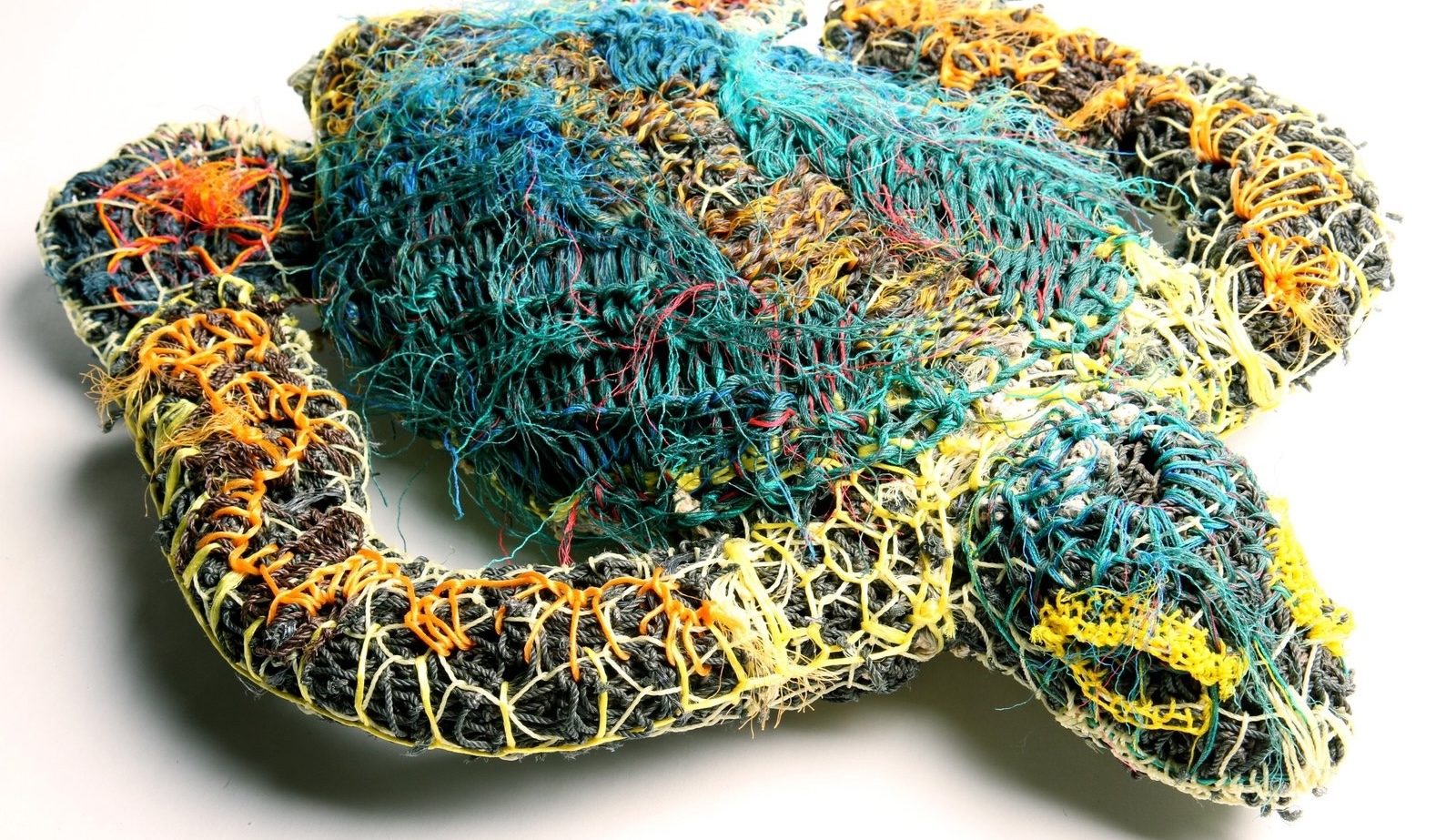
Image caption: Turtle made from ghost net materials, by Ellarose Savage (Darnley Island) Credit: Rebecca Fisher, Australian Museum.
*Adapted from: Extracting the Ocean. Reid, Susan. 2023. “Recovery in the Aftermath of Extractive Fisheries: Ghost Nets.”
[1] Wilcox, Chris, Grace Heathcote, Jennifer Goldberg, Riki Gunn, David Peel, and Britta Hardesty. 2014. “Understanding the Sources and Effects of Abandoned, Lost, and Discarded Fishing Gear on Marine Turtles in Northern Australia.” Conservation Biology : The Journal of the Society for Conservation Biology 29, 1.
[2] TierraMar, and SMaRT@UNSW. 2021. “Ghost Nets. Needs Analysis and Feasibility Study for Northern Australia, Final Report.” Sutherland, 30.
[3] ibid.